You haven't signed in yet, you can have a better experience after signing in
*Please complete the payment within {{receiveCouponInfo.expire_at}}Previous use*
You haven't signed in yet, you can have a better experience after signing in



Activity Rules
1、Activity time:{{ info.groupon.start_at }} ~ {{ info.groupon.end_at }}。
1、Activity time:cease when sold out。
2、Validity period of the Group Buying:{{ info.groupon.expire_days * 24 }} hours。
3、Number of Group Buying:{{ info.groupon.need_count }}x。
Please Pay Attention
1、Teamwork process: Join/initiate a Group Buying and make a successful payment - Within the validity period, the number of team members meets the activity requirements - Group Buying succeeded!
2、If the number of participants cannot be met within the valid period, the group will fail, and the paid amount will be refunded in the original way.
3、The number of people required and the time of the event may vary among different products. Please pay attention to the rules of the event.

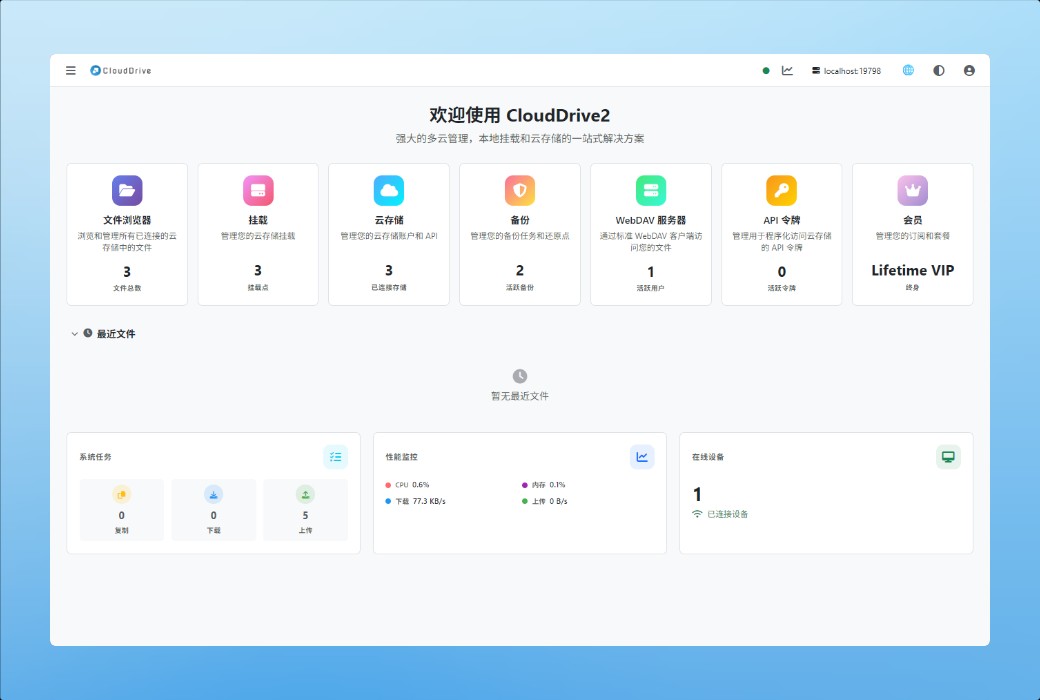
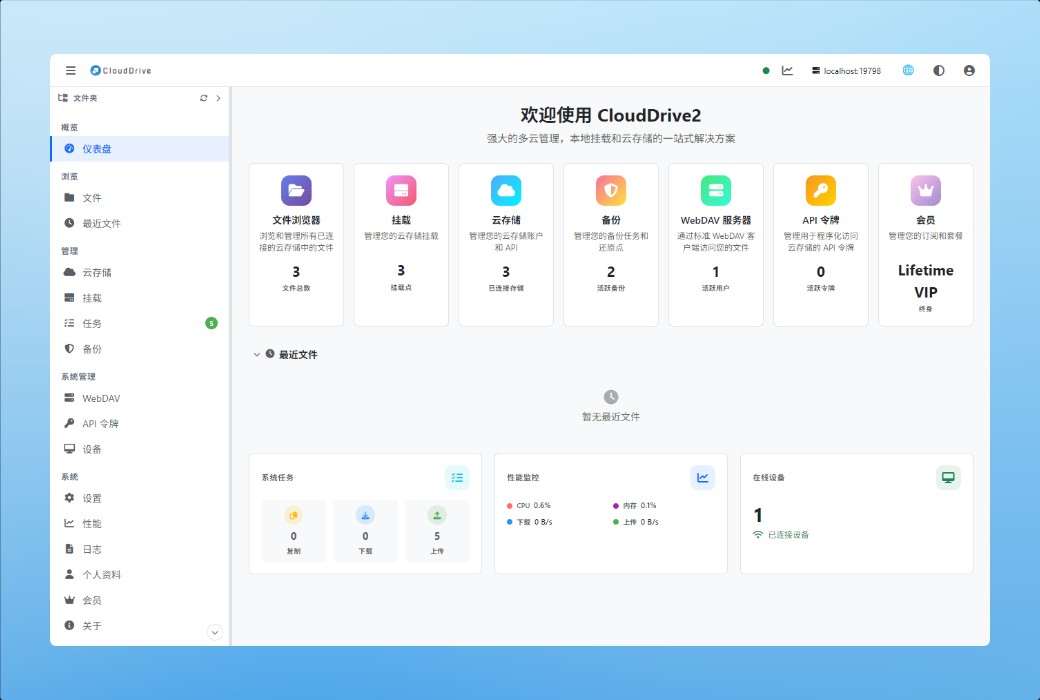
CloudDrive2
Unified management of all cloud disk accounts, cross cloud replication, encryption, backup, and external provision of WebMAV. It is both the backend service installed on computers, NAS, or Docker, and fully integrated into applications on every platform - there is no need to set up another server on mobile phones, TVs, or headsets. Only local mounting is restricted by the system.
Cloud disk local mounting
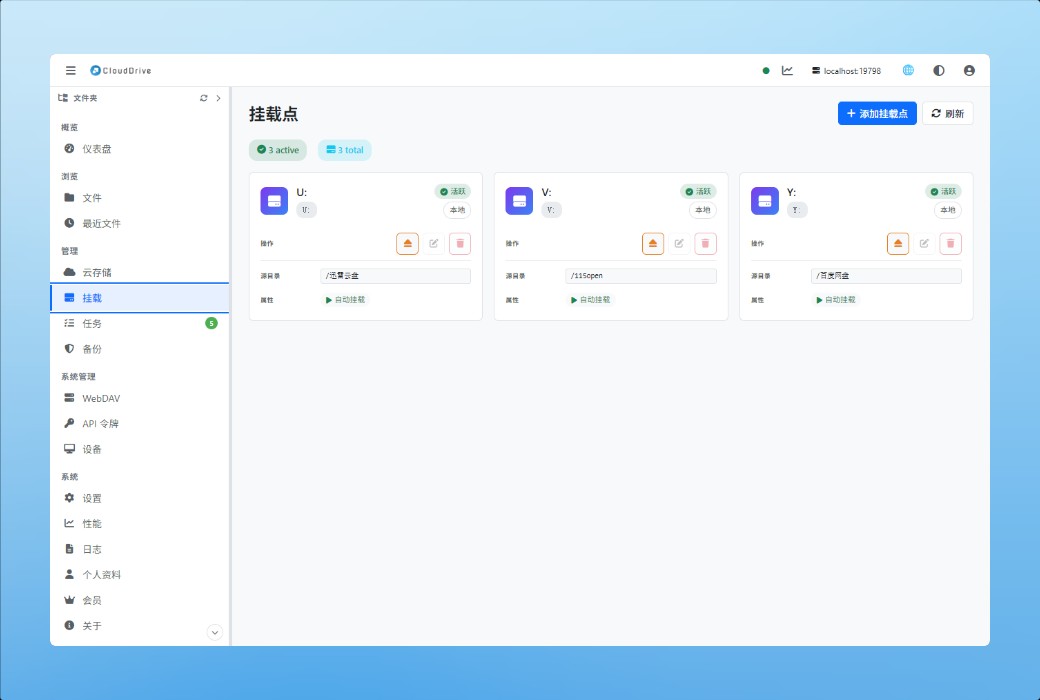
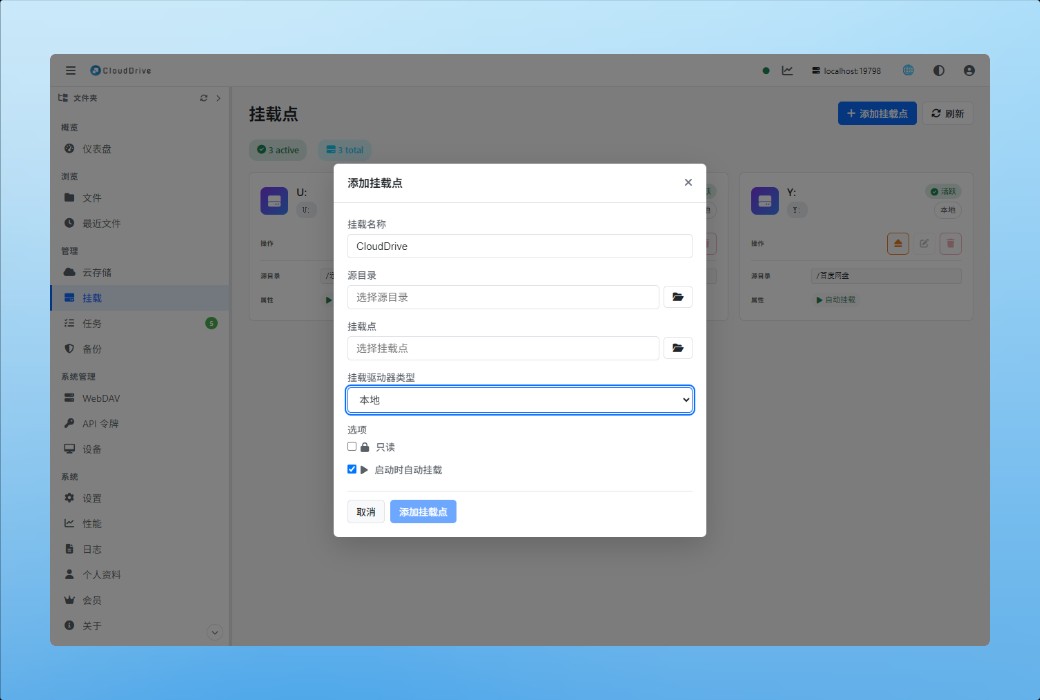
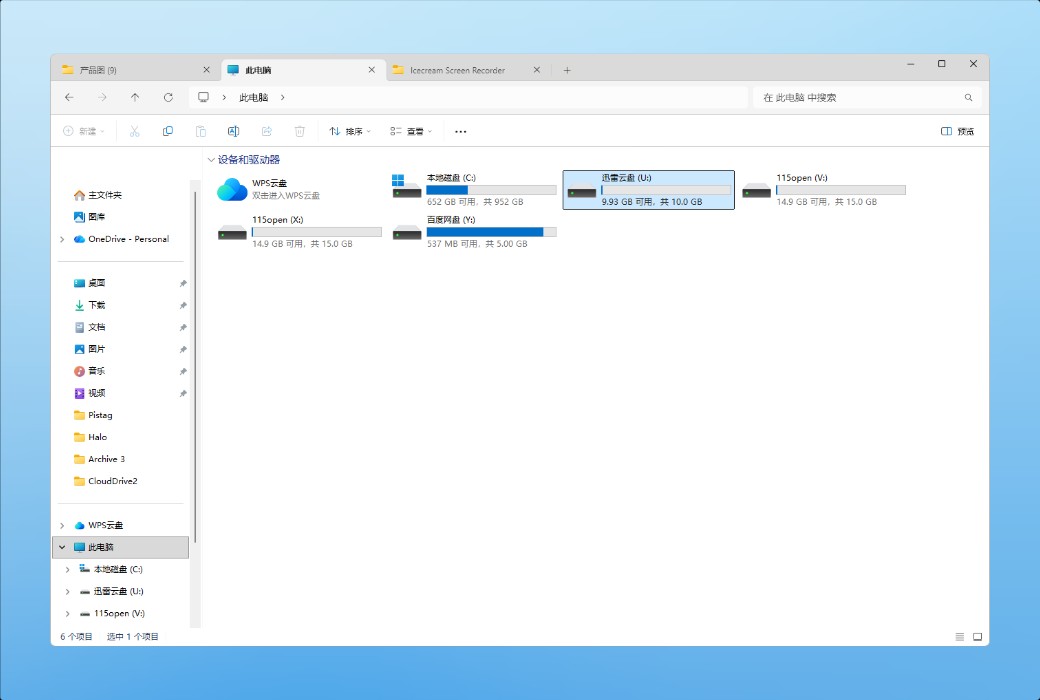
CloudDrive2 can mount a cloud disk or a directory in the cloud disk as a local disk - just like inserting a USB drive into a computer. After mounting, cloud files can be opened, edited, and saved directly without the need for prior download. You can mount only a single cloud disk or mount multiple cloud disks into a unified file system. This way, when switching and organizing files between different cloud drives, there is no need to open each client separately. More importantly, the mounted disk supports complete random read and write operations. Any local program can access it like accessing a local disk, whether it's saving a document directly in office software or dragging the progress bar in a media player, without having to pull down the entire file first.
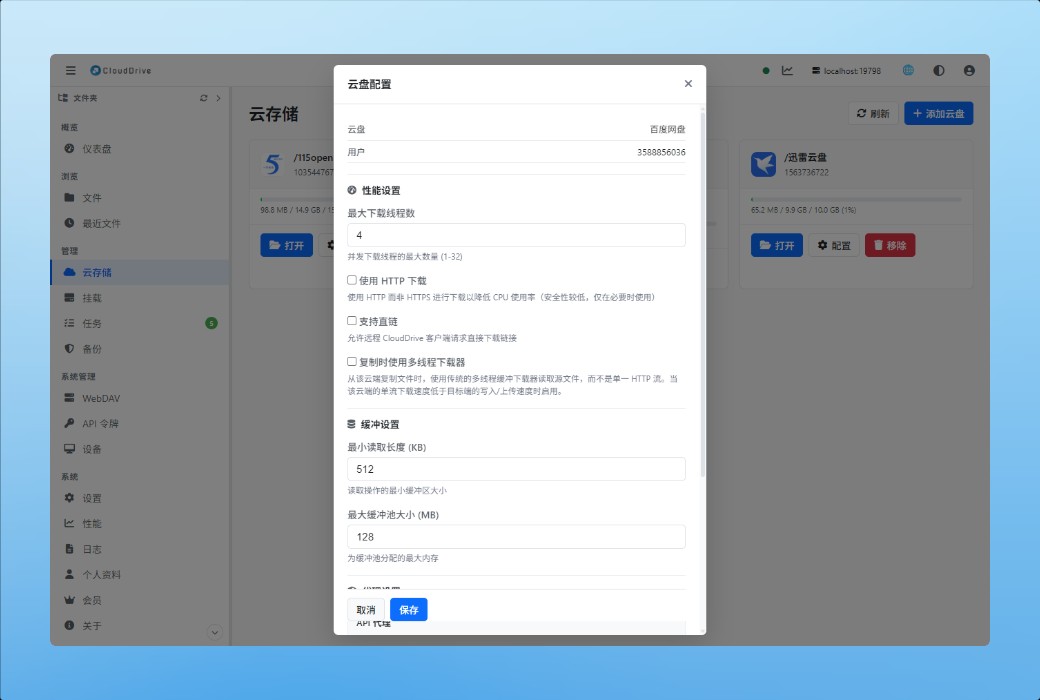
When reading cloud disk files, multi-threaded downloading is used, which greatly increases the speed; With sufficient bandwidth, the user experience is close to that of a local disk.
After modifying a file on one device, the content will be written back to the cloud drive. When the other device is opened, the latest version will be obtained, so there is no need to worry about inconsistent versions or missing changes.
A true file system, not a read-only image
Most tools that mount cloud disks locally provide a "view that can be viewed and copied": file properties are fixed values set uniformly during mounting, cannot be changed by chmod, and extended properties are not supported at all. Writing is more restricted - by default, adding a line after a file that is already in the cloud will fail; To make it successful, you need to first open the local disk cache, and the cost of caching is that the entire file must be downloaded back to the local before making any changes. The mounting of CloudDrive2 is not like this.
On Linux and macOS, the complete POSIX file system is displayed: permission bits, owner and user groups, three timestamps, extended attributes (xattr), and so on. On Windows, Security Descriptors are also fully supported, and ACLs read and write as usual. The cloud drive itself cannot store these things, so CloudDrive2 persists them locally - they are there after modification and still exist after restarting.
Writing is truly random writing. Object storage can only replace the entire file (upload with file hash), so any changes will still generate a new object in the end; The difference is that CloudDrive2 does not need to download the original file back first: it retrieves the unmodified fragments from the cloud while adding the parts you wrote locally, directly piecing them together into a new file and uploading it. Change the middle few bytes of a tens of GB file without spending an hour pulling it down first.
Permission bits, owners, and user groups all exist in reality, and chmod and chown cannot be discarded after modification - the properties are persistent locally and do not depend on whether the cloud drive can store them.
Programs that rely on Xattr work as usual - macOS Finder tags, backup tool metadata, and various tagging tools will not malfunction.
The security descriptor is fully retained, and the permission settings on domain environments and multi-user machines remain in effect as usual.
Database files, editing projects, disk images, and other files that need to be rewritten in place do not need to be pulled back locally with tens of GB before making changes.
Which platforms can be mounted
Hanging the cloud drive as a local disk in the system requires the operating system itself to release it.
These core functions are equally abundant on these platforms. On iPhone, iPad, and Vision Pro, the File Provider extension connects cloud storage to the system's "File" application; On Android, the Storage Access Framework (SAF) allows other applications to browse and open cloud files directly in the system file selector.
Unified multi cloud disk management
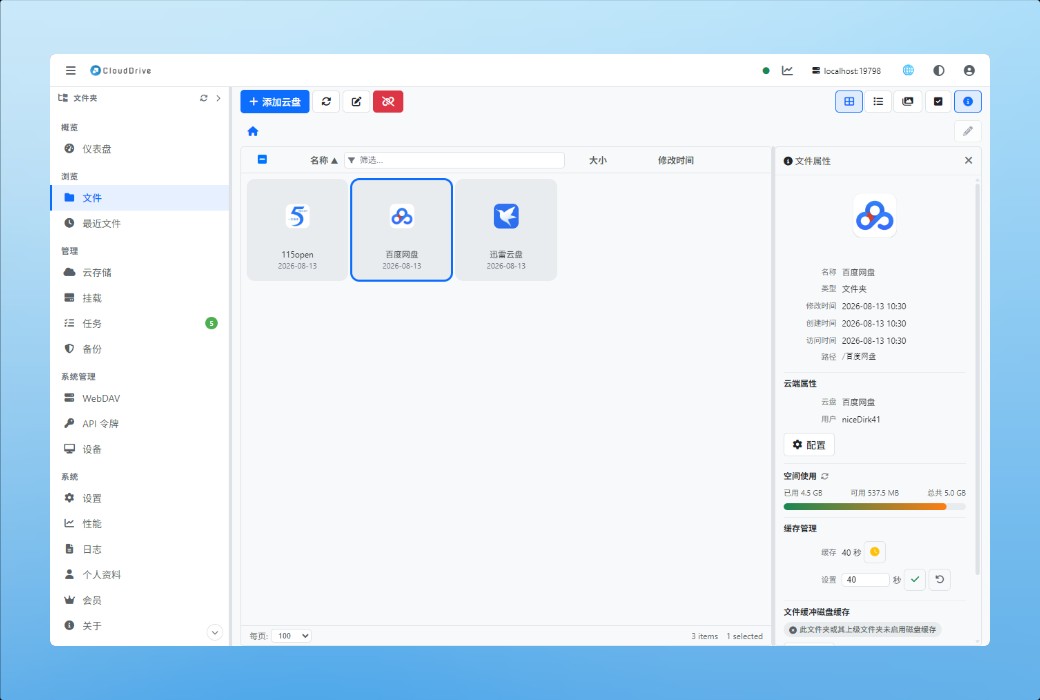
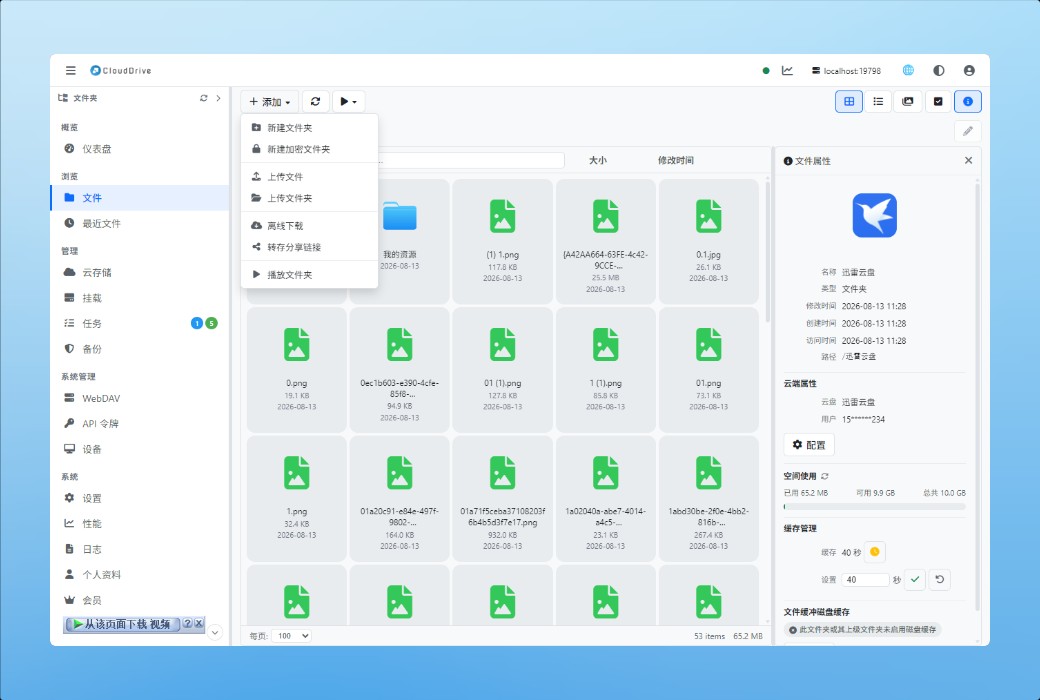
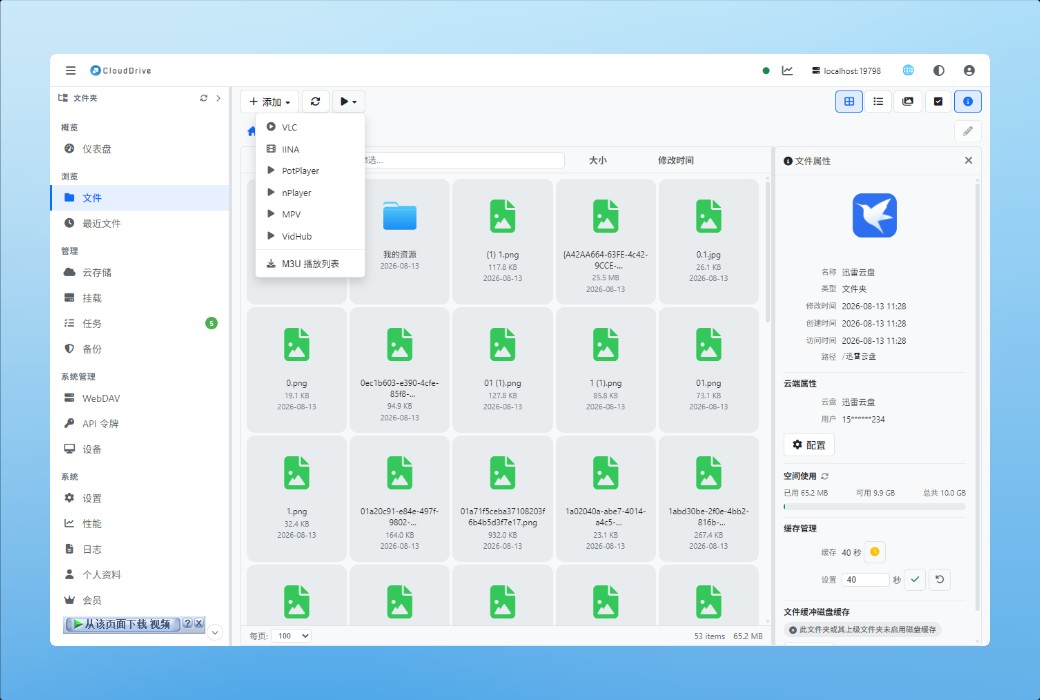
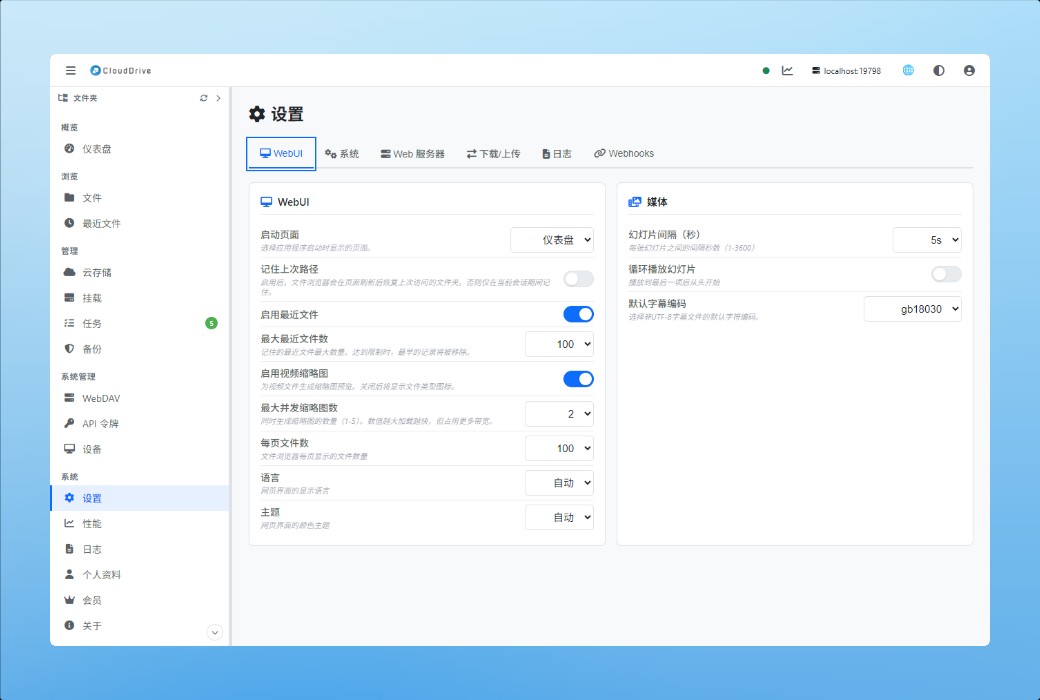
CloudDrive2 comes with a web management interface, where all file operations for cloud drives are completed: browsing directories, viewing images, playing videos and audios online, as well as creating folders, renaming, deleting, moving locations, and uploading local files. No need to switch back and forth between apps on various cloud drives.
The audio and video content on the webpage can also be opened by third-party players, including PotPlayer, VLC Player, Infuse, iina, and nPlayer.
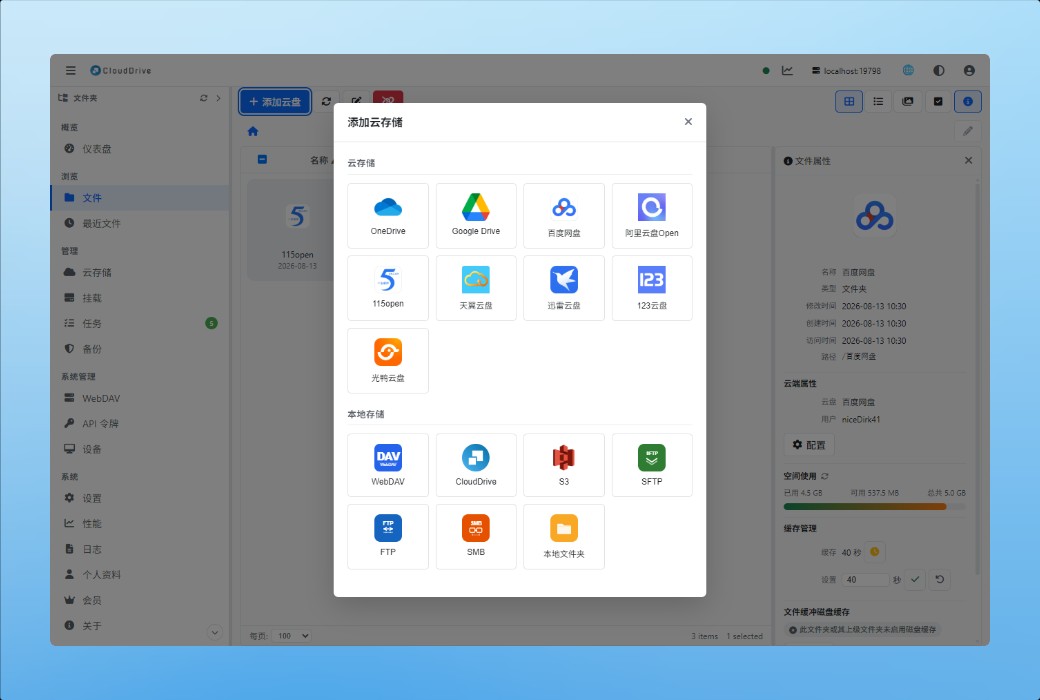
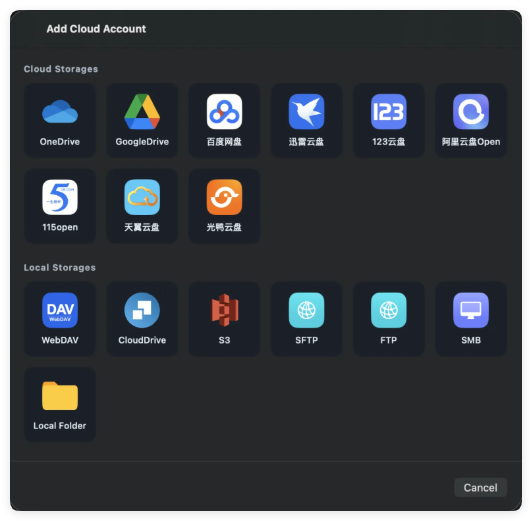
The following are all the options in "Add Cloud Storage", grouped the same as in the application.
Login once, use everywhere
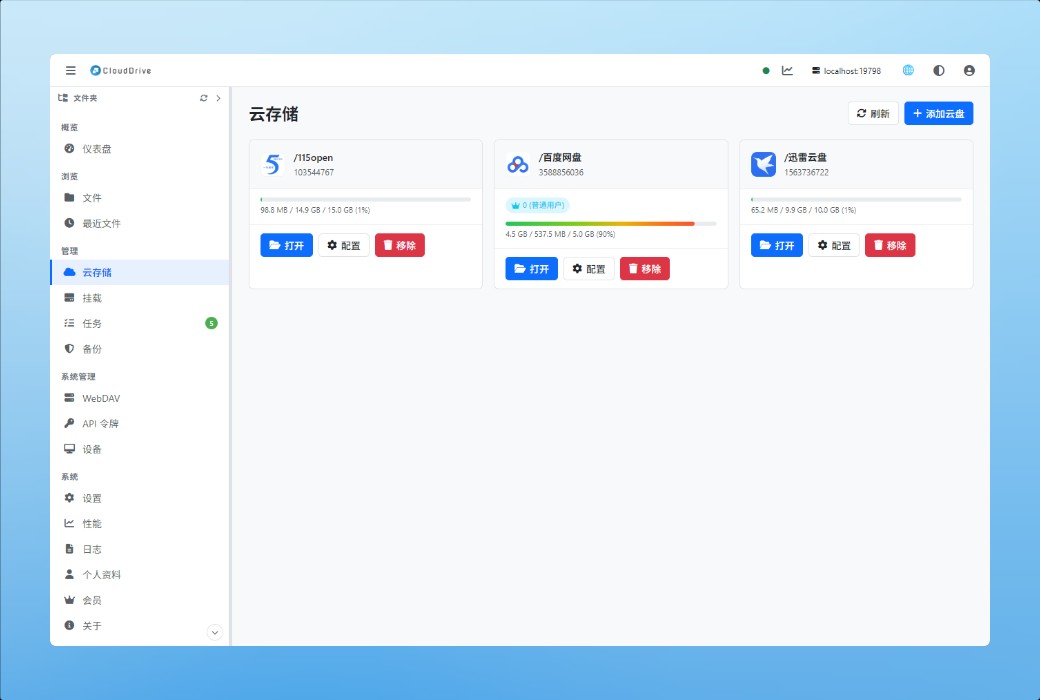
CloudDrive2 provides cloud synchronization of cloud disk accounts: You only need to log in to all cloud disk accounts in one place, and then you can directly use these accounts on any CloudDrive2 device without having to go through the login process again on each device. For people who frequently change their devices, this saves not only time - the fewer times they enter their account and password, the less chance they have of being leaked. Home computers, company computers NAS, They all use the same set of logged in accounts.
WebDAV service
WebMAV is an HTTP based file transfer protocol that can access and manage remote files just like accessing local files. It is widely used in the fields of cloud storage, cloud storage, and NAS.
Powerful WebDAV service management
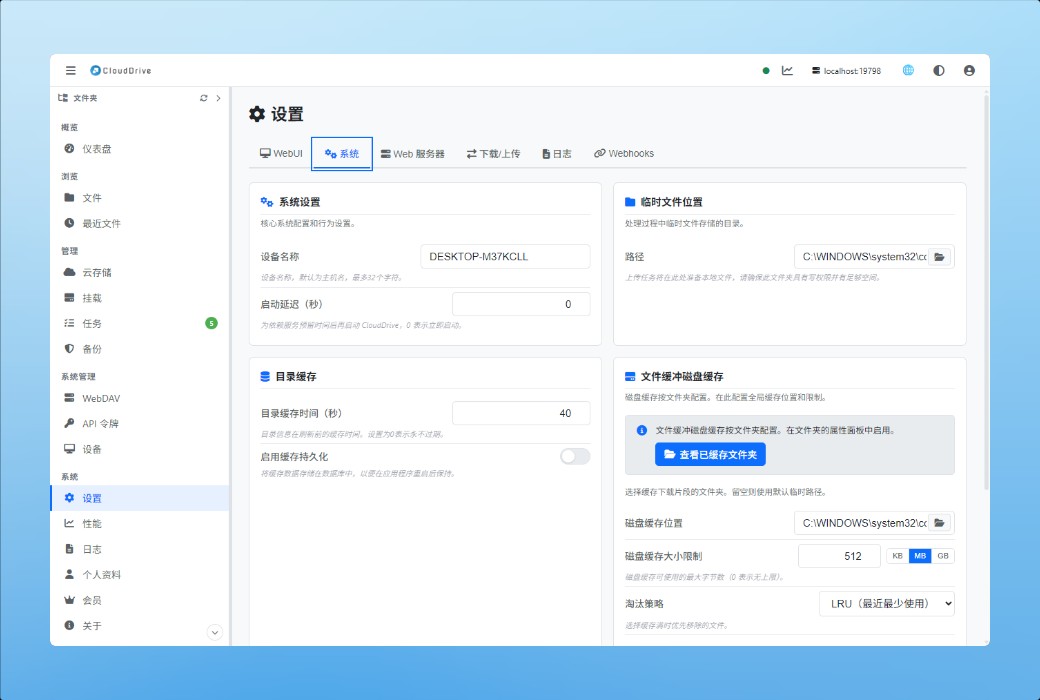
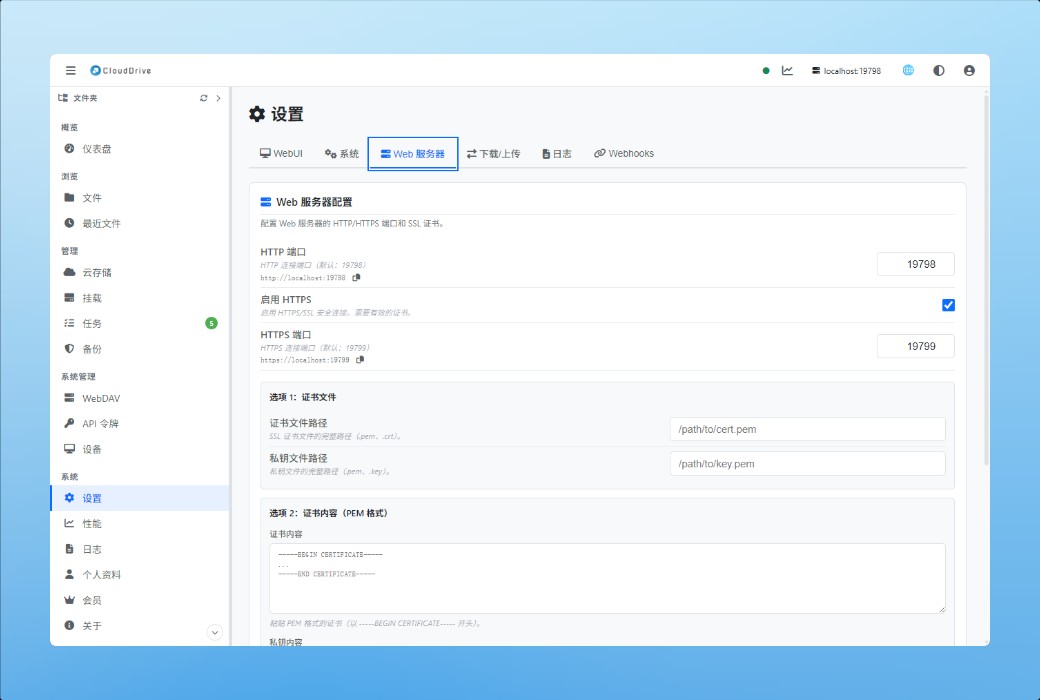
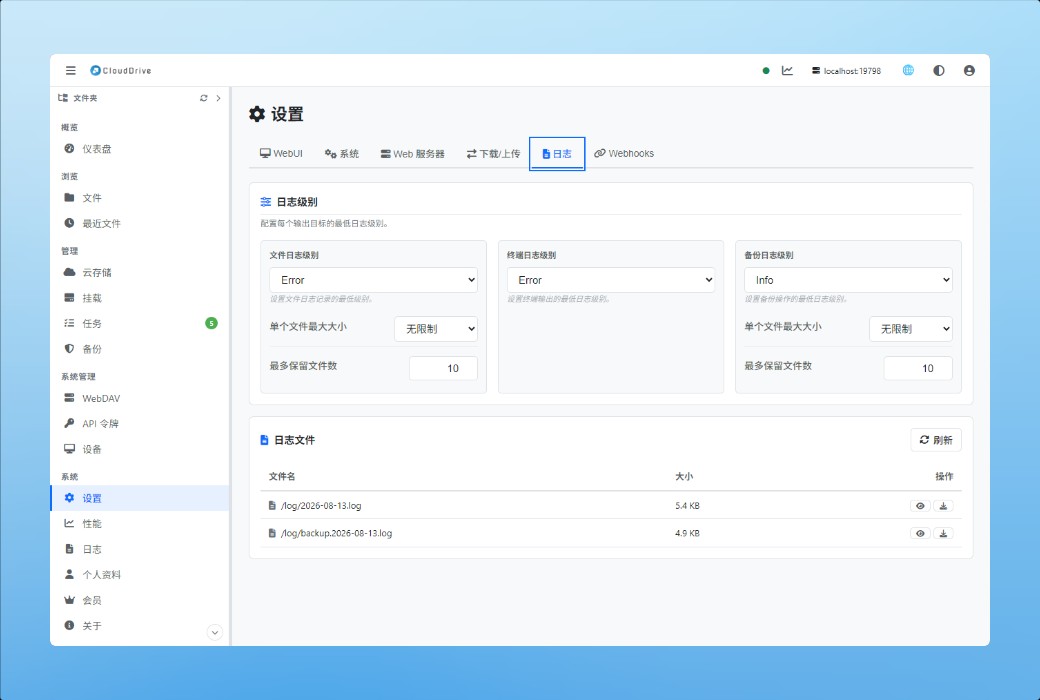
In the system settings interface, various settings of the WebDAV service can be individually controlled:
Independent WebDAV User Management (paid feature)
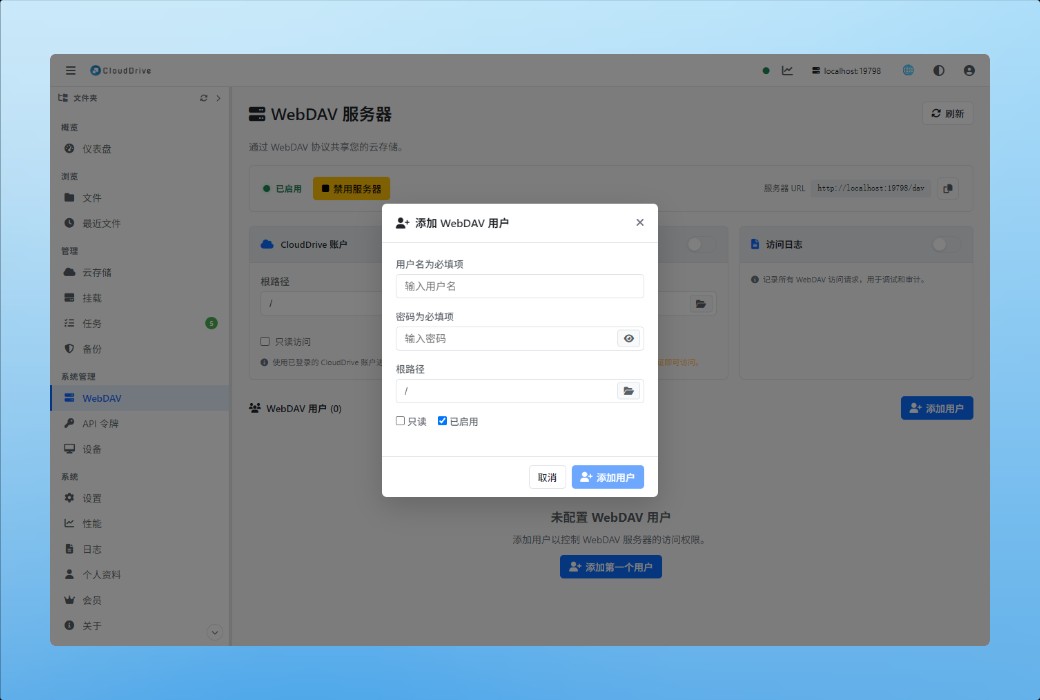
You can create any number of independent WebMAV users, each with their own root directory location and read-only status. When sharing a directory with others, there is no need to hand over one's own account.
Connect the entire CloudDrive using API tokens
Create an API token on a CloudDrive2, and any client that implements the CloudDrive API can access it by adding the token to the address. Another CloudDrive2 is one of them - the option called CloudDrive in the "Add Cloud Storage" list is it; The third-party software operates on the same open platform gRPC APIThere are equally many abilities.
After receiving it, all the cloud drives connected to that machine were seen by the other party as ordinary cloud storage: browsing, playing, copying, and backing up, following the same process as the cloud drives directly connected to this machine.
The difference lies in to what extent it resembles. WebMAV is a universal protocol, but the cost is that only the file itself remains - column directories, read and write bytes, and the capability ends here. By using CloudDrive token, if both ends speak the same language, the capabilities of the cloud drive can be transmitted as is.
Pro Features
Source of information:https://www.clouddrive2.com/features.html
Official Website:https://www.clouddrive2.com/features.html
Download Center:https://clouddrive.apsgo.cn
Delivery Time: Automatic delivery within 24 hours
Operating Platforms: Windows, Linux, macOS, Android, Docker, Nas
Interface Language: Supports Chinese interface display.
Update Instructions: Use and update during the subscription period.
Trial Before Purchase: Free trial available before purchase.
How to Receive the Product: After purchase, the activation information will be sent to the email used for placing the order. You can also view the corresponding product activation code in your personal center, under "My Orders".
Number of Devices: Free users: Up to 2 devices online simultaneously. Paid members: Up to 5 devices online simultaneously
Changing Computers: Uninstall on the old computer and activate on the new one.
Activation Guide: To be added.
Special Instructions: To be added.
References:https://www.clouddrive2.com/features.html

Any question

Pro 1Quickly copy files across cloud disks
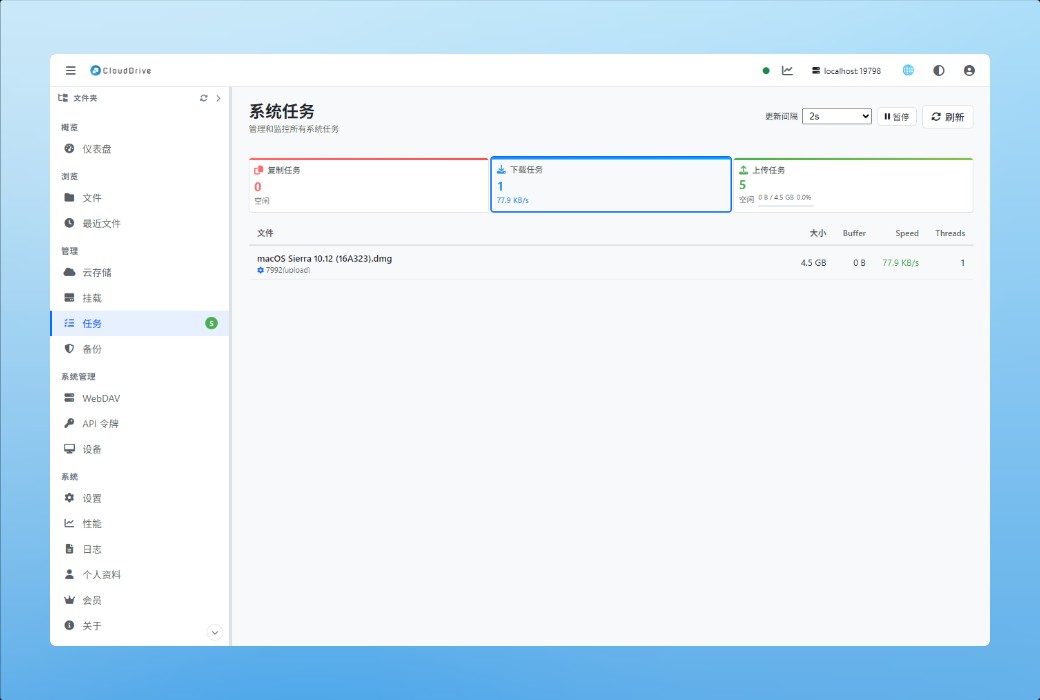
When dealing with large amounts of data, migration between cloud drives is a common but complex issue. Many users need to migrate between cloud drives because they need to change cloud drive services or want to synchronize data between multiple cloud drive services. However, due to the specific APIs and data formats of each cloud disk service, migration between cloud disks often requires users to perform tedious manual operations, and speed is often limited by network bandwidth. If the amount of data is large, the migration time may be very long.
The migration function between cloud drives in CloudDrive solves this problem. CloudDrive fully utilizes the instant transfer mechanism of cloud drives to achieve instant migration as much as possible. The second transfer mechanism is a technology that can quickly complete file transfer. Its working principle is to obtain the hash value of the file before uploading it, and then send the hash value to the server. The server checks whether the file already exists based on the hash value. If the file already exists, the server does not need to receive file data anymore, but directly creates a new file record pointing to the existing file data, thus achieving instant transfer. This method does not require recalculating the hash of the file, and is particularly suitable for migration between different cloud drives using the same hash algorithm, or between different accounts on the same cloud drive, achieving true instant transfer.
CloudDrive can directly obtain file hash values from cloud disks. If the target cloud disk uses the same hash algorithm as the source cloud disk, the process of calculating hash values can be skipped, thus achieving true fast replication. This approach not only improves replication speed, but also reduces network bandwidth usage and lowers user costs.
By using a second transfer mechanism, CloudDrive can quickly migrate data between cloud drives, greatly improving migration efficiency and saving users' time. Moreover, CloudDrive's cloud disk migration function supports multiple cloud disk services, making it easy for users to migrate regardless of which cloud disk service they are using.
Of course, not all files can use the second transfer mechanism. For these files, CloudDrive still provides an efficient migration solution. CloudDrive can directly download and upload files from one cloud drive to another cloud drive without first downloading the files locally. In this way, users do not have to worry about insufficient local storage space, nor do they have to worry about network issues during downloading and uploading.
Overall, CloudDrive's migration function between cloud drives provides a convenient and efficient solution, allowing users to more easily manage and move their cloud data. Whether it is the need to migrate large amounts of data or synchronize data between multiple cloud services, users can trust CloudDrive to achieve satisfactory results.
Pro 2Notice of Document Change
File change notification is a mechanism provided by the operating system, which generates an event notification when a file or directory in the file system changes. These changes may include the creation, deletion, movement, renaming, and modification of file content. Applications can subscribe to these events to receive timely notifications when files or directories change, so that they can perform corresponding processing.
The 'File Change Notification' feature of CloudDrive utilizes this mechanism to enable mounted cloud disk file systems to support file change notifications. When the mounted file system undergoes file changes (such as creating files, deleting files, renaming files, modifying files, etc.), third-party applications that support FileSystemWatcher or FileNotify will receive timely notifications from the operating system. For example, media management programs such as Emby, Jellyfin, and Plex can utilize this feature to monitor changes in media folders.
Moreover, CloudDrive has further extended this mechanism. Not only does it support file changes generated by mounting the file system, but it also supports modifying files through the web interface, modifying files through the WebDAV Server, or importing offline files through CloudDrive to download file changes. CloudDrive generates correct file change notifications for all these file changes, ensuring that third-party applications can obtain the latest status of files in real time.
Pro 3File access monitoring and permission control
The "File Access Monitoring and Permission Control" feature of CloudDrive provides users with detailed file system access monitoring, which cannot be compared to ordinary file systems.
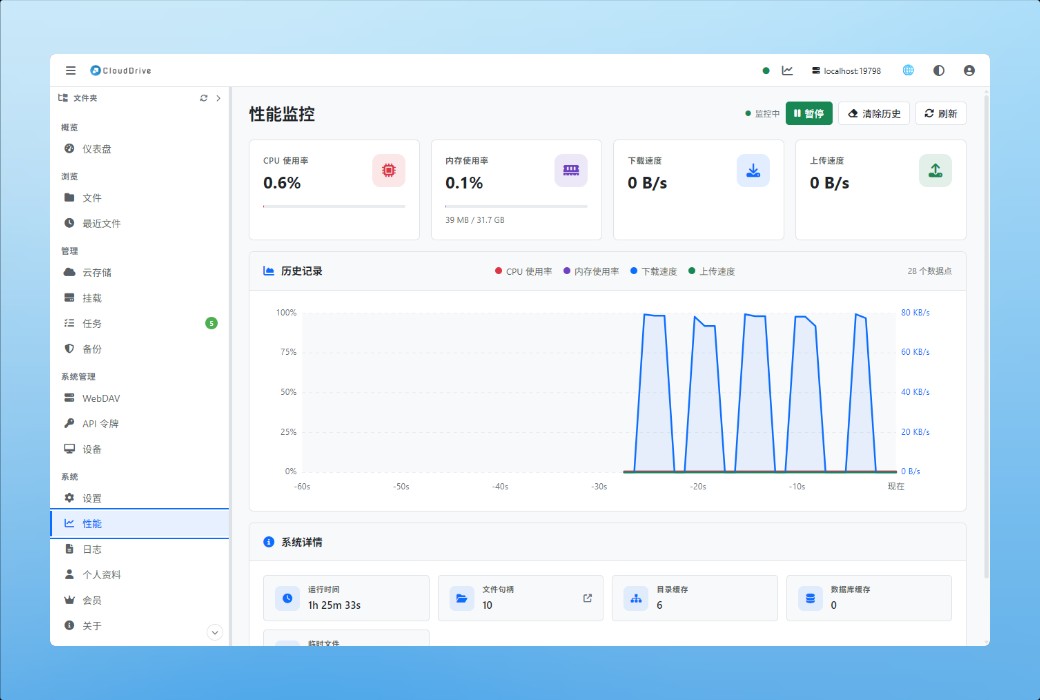
CloudDrive can display in real-time which process is currently accessing which file, including displaying the path of the accessing process and file, as well as the download speed when accessing cloud storage files. In this way, users can easily understand the file access status and performance of each process.
Moreover, CloudDrive also provides permission control functionality, allowing users to set which processes can access the mounted file system and which processes cannot access it. Processes that have been blacklisted will not be able to open files mounted on CloudDrive. This provides users with extremely high security, effectively preventing malicious processes from accessing their files.
Through this feature, users can better manage and protect their files, avoiding data breaches and unnecessary troubles. This feature of CloudDrive is highly valuable for both individual and enterprise users.
Pro 4Multi cloud disk backup
When facing the protection and backup of important data, multiple backups are a very effective strategy. Multiple backups can improve data security, avoid single point of failure, and ensure data integrity and accessibility.
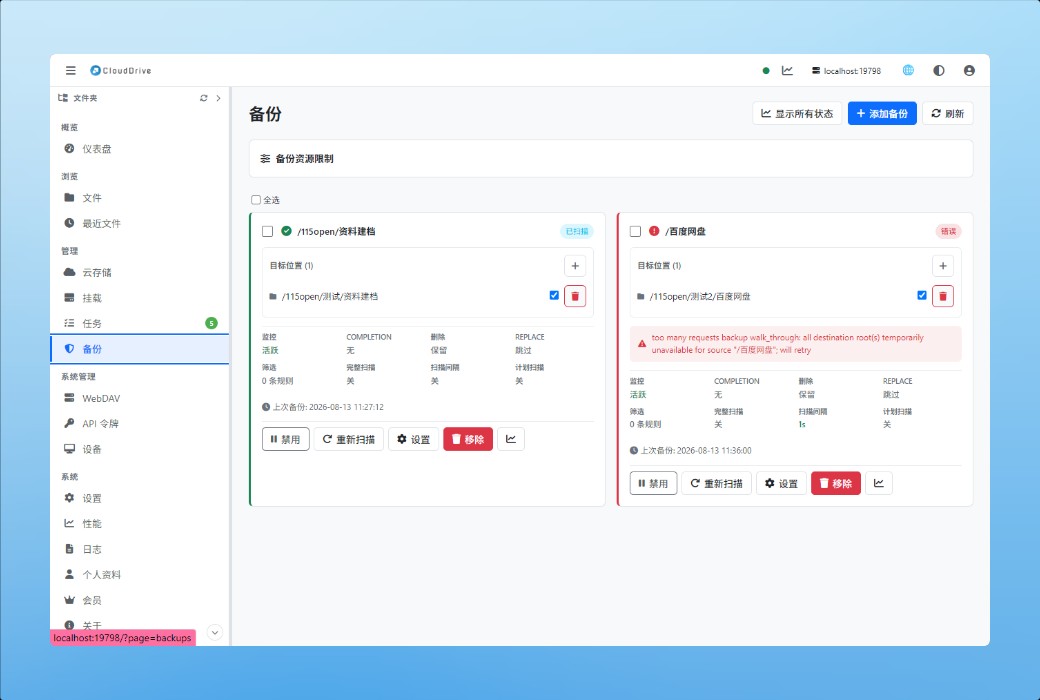
The "multi cloud disk backup" feature of CloudDrive is designed to meet this requirement. Users can specify the local folder or cloud storage folder that needs to be backed up, and CloudDrive will automatically back up the contents of the specified folder to multiple local or cloud storage folders. In this way, users' data has multiple safeguards, and even if there is a problem with a cloud storage service, it will not affect the security of users' data.
More importantly, CloudDrive's "multi cloud disk backup" feature supports real-time updates. When files in the backup folder are modified, these modifications will be updated in real-time to all backup destination folders. In this way, whenever users view their backup data, they can see the latest file status without missing any modifications.
When the source file or folder is deleted or updated, the corresponding file or folder in each target folder can choose to keep, delete, or keep an unlimited number of historical versions. Subsequent versions will support restoring files or folders from any historical version
CloudDrive's "multi cloud disk backup" feature provides users with ultimate data security. Users do not need to worry about data loss or data obsolescence. With simple settings, they can achieve automatic synchronization and backup of local or cloud storage data with multiple local or cloud storage devices, making data protection easy and simple.
Pro 5Transmission speed limit
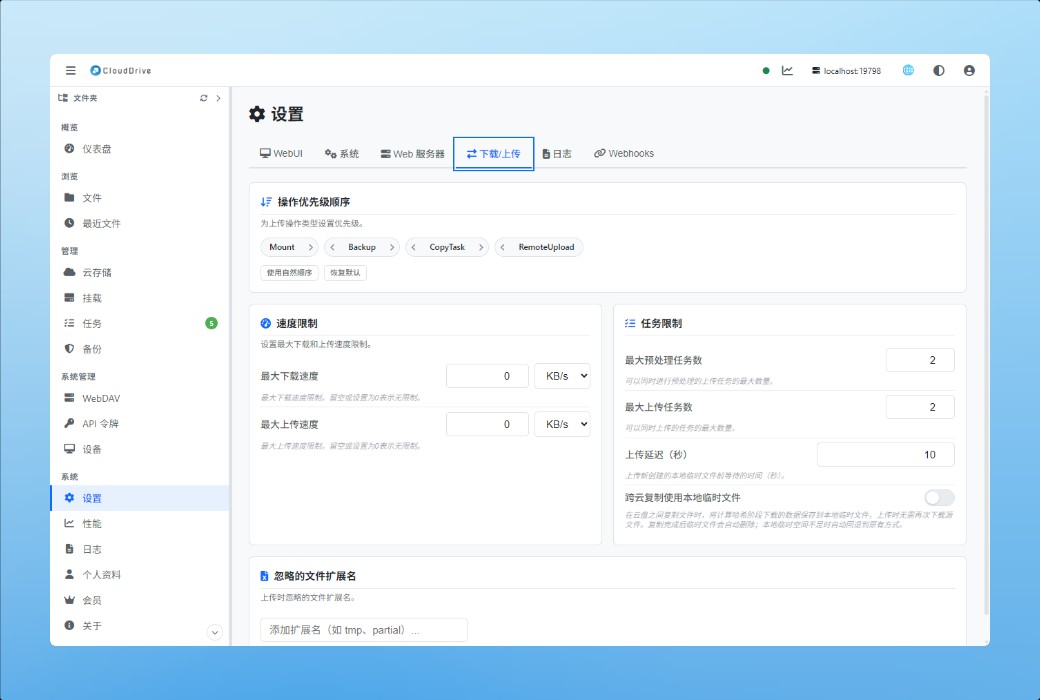
Due to the fact that CloudDrive 2 defaults to full internet speed during operation, which takes up too much internet speed and slows down the overall internet speed, the speed limit function becomes more useful at this time.